


Second Step Early Learning has been shown to improve young students' executive-function skills—like attention, memory, and self-control—which are not only predictive of Kindergarten readiness but are essential for success in and outside the classroom.
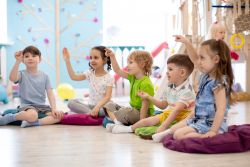 WHAT IS THE GOAL OF SECOND STEP CIRRICULUM?
Second Step® programs are designed to help students build essential social-emotional skills such as nurturing positive relationships, managing emotions, and setting goals, enabling them to thrive in school and beyond by fostering healthy interpersonal relationships, association with nonviolent peers, and enhanced academic achievement.
.jpg) SKILLS FOR EVERYDAY SUCCESS
SKILLS FOR EVERYDAY SUCCESSChildren need social-emotional skills to thrive both in the classroom and in life. Social-emotional learning (SEL) curricula teach children techniques to: Gain confidence, Set goals, Make better decision, Collaborate with others in work and play, and Navigate the world more effectively
Social-emotional learning isn’t just a feel-good activity. It’s not psychotherapy or an attempt to parent kids. Nor is it a substitute for core academic subjects such as math, science, or literacy.
COOPERATION |
DECISION-MAKING |
COMMUNICATION |
Instead, SEL concepts provide an extra dimension to education, focusing on improving cooperation, communication, and decision-making. In a world where emotional intelligence is critical for lifelong happiness, successful careers, and healthier relationships, SEL gives students a framework for developing these skills.
Children who are socially and emotionally competent have more friends and more connections with positive peers, and are less likely to be rejected, isolated, or bullied. Children with friends are happier and more successful in school.
Empathetic children with good perspective-taking skills are less likely to be physically, verbally, or indirectly aggressive toward peers.
Children’s social relations affect their feeling of connectedness at school, which affects their sense of academic competence.
The social-emotional competence of students is an important component of effective bullying prevention.
SEL interventions show an average return on investment of $11 for every dollar spent.
This program is supported by the Department of Workforce Services.
Connect With Us | Parent Handbook | USDA NONDISCRIMINATION STATEMENT